_resize.png)
Creating Native Meadows
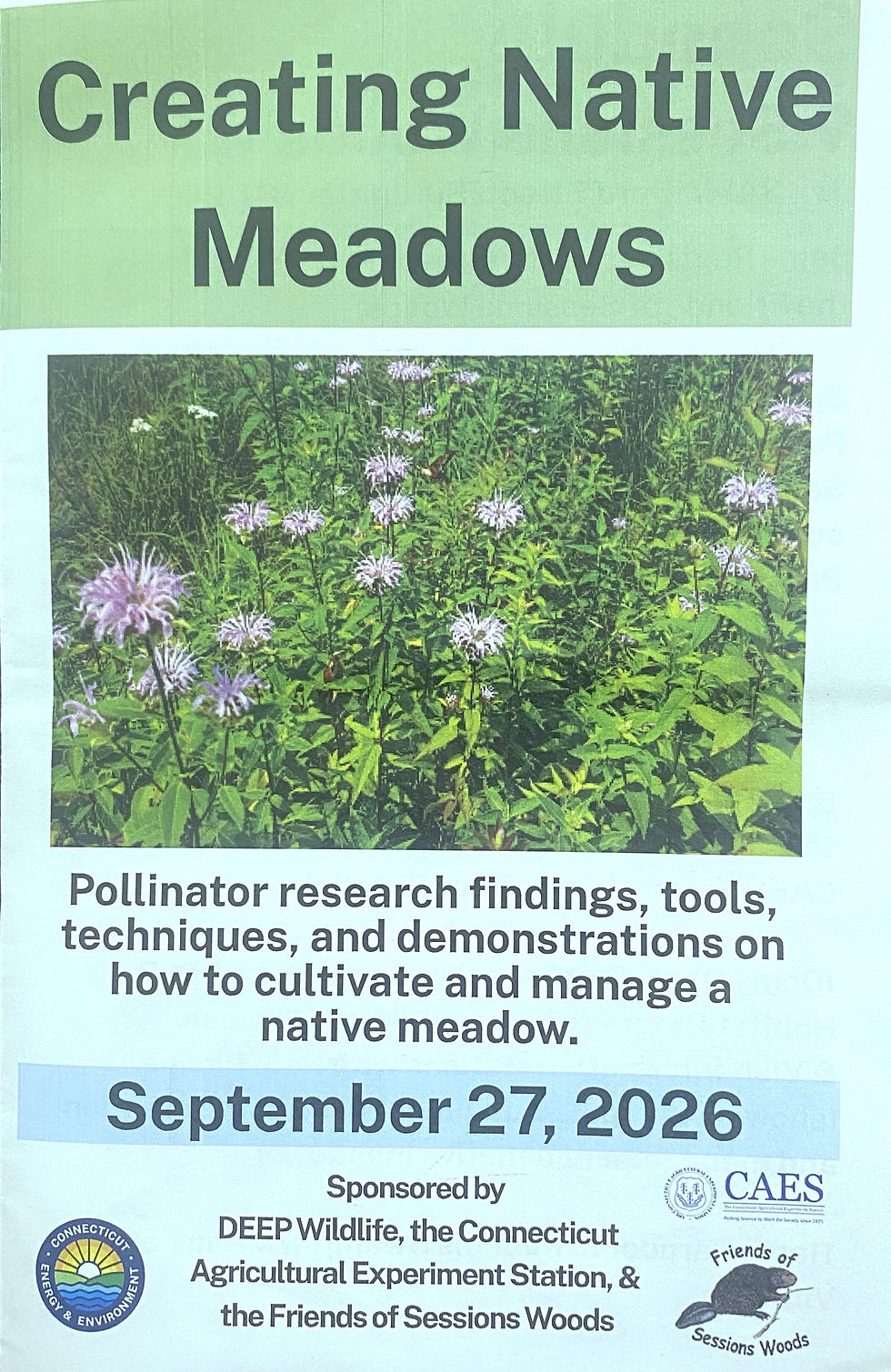
Meadows are part of an early successional habitat. They are important to wildlife in many ways, including nesting and feeding. So attending the September 27th workshop Creating Native Meadows with CT DEEP Wildlife Biologist Pete Picone at Sessions Woods in Burlington was a great way to learn more about creating and managing these valuable environments. As an expert in managing lands for wildlife conservation, Pete has led numerous teams in large scale, meadow restoration projects on CT DEEP properties, including Goshen, Suffield and the Falls Village, Robbins Swamp Wildlife Management Areas. We are happy to have been among the volunteers for those installations.
The workshop included a deep dive into bee research findings conducted by Entomologist Tracy Zarrillo from the Connecticut Agricultural Experiment Station with her team members, Dave M. and Conner. Tracey has been monitoring the Suffield WMA since 2020 and has made some important discoveries of bee species thought to be no longer in the region/state or bees never found in this area. Bombus Terricola, the yellow-banded bumble bee was one such find. An oil bee, the yellow loosestrife bee, was found by David Mantack, and also at Robbins Swamp, David found the rare Roberval Miner Bee, Andrena robervalensis, a specialist of goldenrod and hairy asters. It was last recorded in 2002. At the Kent WMA, David recorded a monarda fistulosa specialist, Short face bee, Dufourea Monardae Bumblebee, a specialist black sweat bee. It is very rare. The data recorded by David and Tracy appears to show native plant meadow restorations do have a positive effect. Plant it and they will come.
Cheshire Pollinator Pathway board members have volunteered with Peter and Tracy in a variety of projects for a number of years. We owe them for everything they've taught us and continue to teach us every year. Plus, they both deserve kudos for sharing their time to mentor and work with students -- youth who will likely be future wildlife biologists and entomologists.
Takeaways for meadow management (condensed info here):
Habitat is the foundation for wildlife. Strive for biologically diverse fields March 1st is a good rule-of-thumb for mowing (woodcock nesting season begins) Mow half of the meadow every year. Alternate areas you mow. Any size meadow is valuable—from a pocket meadow to your quarter-acre lot, etc. Focus on edges to improve ecotone (the soft edge where the forest meets the field). Think grasses, wildflowers and thicket. Manage invasives. Goldenrods are essential to late season meadows for migration and overwintering wildlife. Canada goldenrod is rhizomatous; other goldenrods such as Showy goldenrod and Blue stem goldenrod grow as clumps and are easier to plant among. Goldenrods can deter mugwort.
Additionally: Observe Nature. Learn to predict seasonal plants & animal interaction.
Prioritize invasives.
Get rid of mugwort before it flowers.
Increase native plants wherever you can.
You can see more of David Mantack's bee research on Insta David Mantack's bee photo on Instagram



Comments